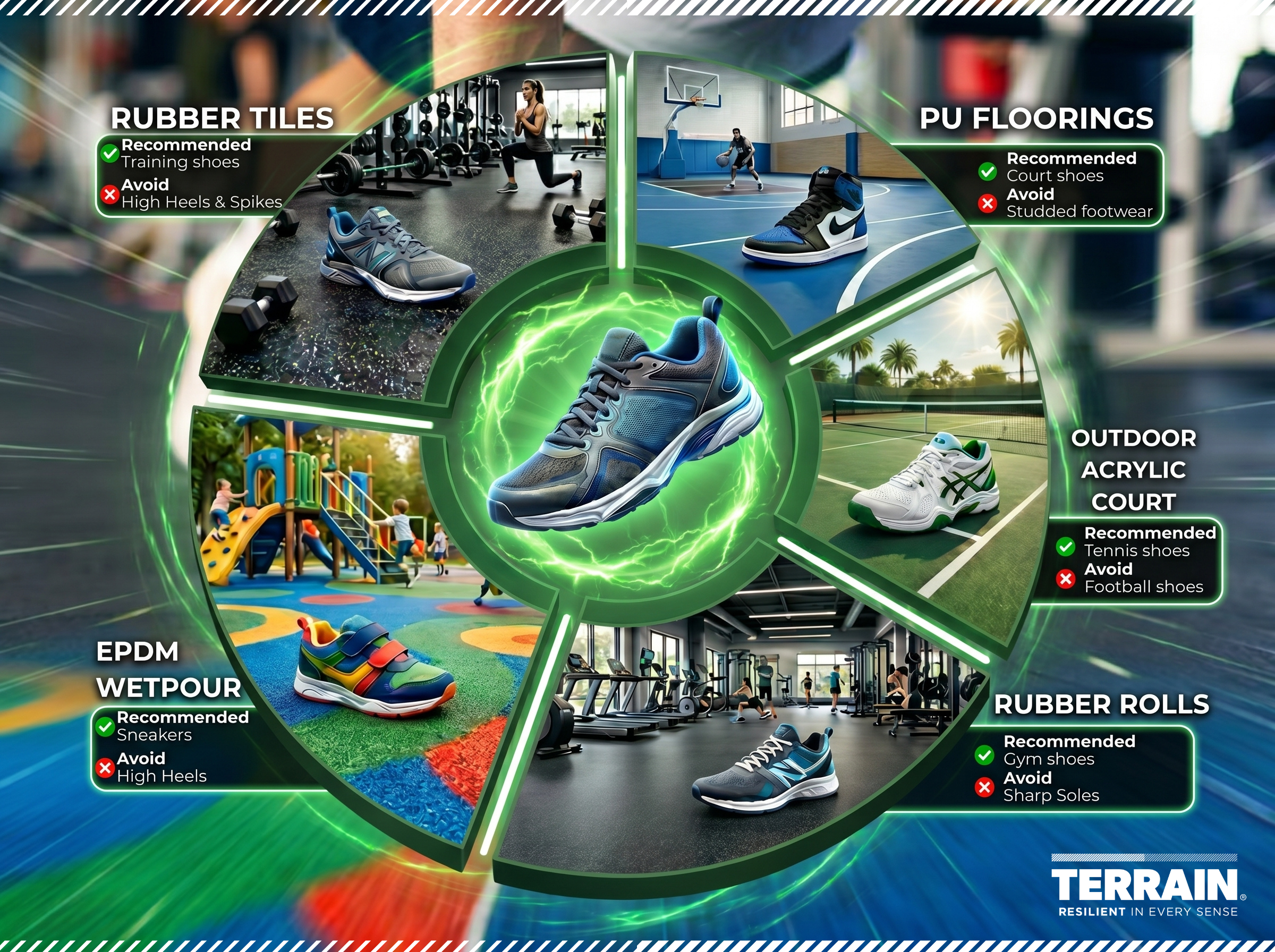
The Complete Footwear Guide for Sports & Safety Flooring: Protect Your Floor and Improve Performance
When investing in quality flooring for gyms, sports courts, playgrounds, schools, or commercial spaces, many people focus on installation, durability, and appearance but often overlook one important factor: the right footwear.
The type of shoes used on a flooring surface can directly affect safety, performance, maintenance, and the lifespan of the floor. Whether you have rubber flooring, PU sports flooring, acrylic courts, rubber rolls, or EPDM wet pour surfaces, choosing suitable footwear helps keep the surface in excellent condition for years.
In this guide, we explain the best footwear for each flooring type and share practical tips every facility owner, manager, or user should know.
Why Footwear Matters
Different flooring systems are designed for different environments and activities. Wearing the wrong shoes can lead to:
- Reduced grip and slipping risks
- Scuff marks and stains
- Surface cuts, punctures, or premature wear
- Reduced sports performance
- Higher maintenance costs
Using the correct footwear protects both users and the flooring investment.
1. Best Shoes for Rubber Flooring
Rubber flooring is commonly used in gyms, fitness centers, training zones, walkways, and multi-purpose spaces because it offers durability, comfort, and shock absorption.
Recommended Footwear
- Training shoes
- Running shoes
- Non-marking sneakers
- Cross-training shoes
- Flat rubber-soled shoes
Avoid
- High heels
- Metal spikes
- Hard leather soles
- Sharp or damaged shoes
Why It Matters
Clean sports shoes provide good grip while reducing marks and unnecessary wear. High heels and sharp edges can damage the rubber surface.
2. Best Shoes for Rubber Rolls
Rubber rolls are often installed in gyms, fitness studios, commercial areas, and training facilities due to their seamless look and excellent impact resistance.
Recommended Footwear
- Gym shoes
- Running shoes
- CrossFit shoes
- Non-marking sneakers
- Flat rubber sole shoes
Avoid
- High heel
- Cleats or studs
- Sharp soles
- Shoes contaminated with oil or chemicals
Why It Matters
Proper footwear helps maintain the finish and prevents damage from pressure points or contamination.
3. Best Shoes for PU Sports Flooring
PU (polyurethane) flooring is popular for indoor sports halls, basketball courts, badminton courts, volleyball courts, and school sports areas. It is designed for smooth movement, grip, and player comfort.
Recommended Footwear
- Basketball shoes
- Volleyball shoes
- Badminton shoes
- Indoor court shoes
- Clean running shoes
Avoid
- Outdoor shoes carrying dirt or gravel
- Studded footwear
- Hard formal shoes
- High heels
Why It Matters
Indoor sports shoes are designed to work with PU surfaces, giving better traction and reducing the risk of slipping.
4. Best Shoes for Acrylic Flooring
Acrylic flooring is widely used for outdoor tennis courts, basketball courts, multi-sport courts, and padel surroundings. It is weather-resistant and built for active use.
Recommended Footwear
- Tennis shoes
- Padel shoes
- Basketball shoes
- Running shoes
- Flat rubber-soled sports shoes
Avoid
- Football boots with studs
- Metal spikes
- High heels
- Shoes with damaged soles
Why It Matters
Court shoes improve movement, grip, and comfort while preventing unnecessary abrasion on the acrylic surface.
5. Best Shoes for EPDM Wet Pour Flooring
EPDM wet pour flooring is commonly used in playgrounds, parks, schools, walking areas, and recreational spaces. It is known for safety, cushioning, and colorful design options.
Recommended Footwear
- Sneakers
- School shoes with smooth soles
- Running shoes
- Casual footwear
- Soft flat sandals (light use)
Avoid
- High heels
- Metal cleats
- Sharp-edged footwear
- Damaged bicycle stands or pointed objects
Why It Matters
This flooring is designed for pedestrian use and child safety. Soft-soled footwear helps maintain the surface and ensures comfort.
General Footwear Tips for All Flooring Types
- Keep Shoes Clean -Dust, sand, and small stones trapped in soles can scratch or wear surfaces over time.
- Use Non-Marking Soles -Non-marking shoes help prevent black streaks and scuff marks, especially indoors.
- Separate Indoor and Outdoor Shoes - For sports facilities, dedicated indoor shoes are highly recommended.
- Replace Worn-Out Shoes - Damaged soles can reduce grip and increase the risk of accidents.
- Avoid Dragging Heavy Items - Even with proper shoes, dragging furniture or equipment can damage flooring.
Maintenance Benefits of Proper Footwear
When users wear the right shoes, facility owners benefit from:
- Longer flooring lifespan
- Lower cleaning costs
- Better appearance
- Improved user satisfaction
- Reduced repair expenses
- A simple footwear policy can save significant maintenance costs over time.
Quick Footwear Guide
| Flooring Type | Best Shoes | Avoid |
| Rubber Flooring | Sports shoes | Heels, spikes |
| PU Flooring | Court shoes | Studs, dirty outdoor shoes |
| Acrylic Flooring | Tennis / sports shoes | Metal spikes |
| Rubber Rolls | Training shoes | Sharp soles |
| EPDM Wet Pour | Sneakers / casual shoes | Heels, cleats |
Flooring performance is not only about the material it is also about how the surface is used every day. The right footwear improves safety, enhances athletic performance, and protects your investment.
If you manage a gym, school, sports court, playground, or commercial facility, setting clear footwear guidelines is one of the easiest ways to maintain your flooring and keep users safe.
For expert advice on sports and safety flooring solutions, contact Terrain Floorings today.